Estate Appraisal Process: What Information to Share
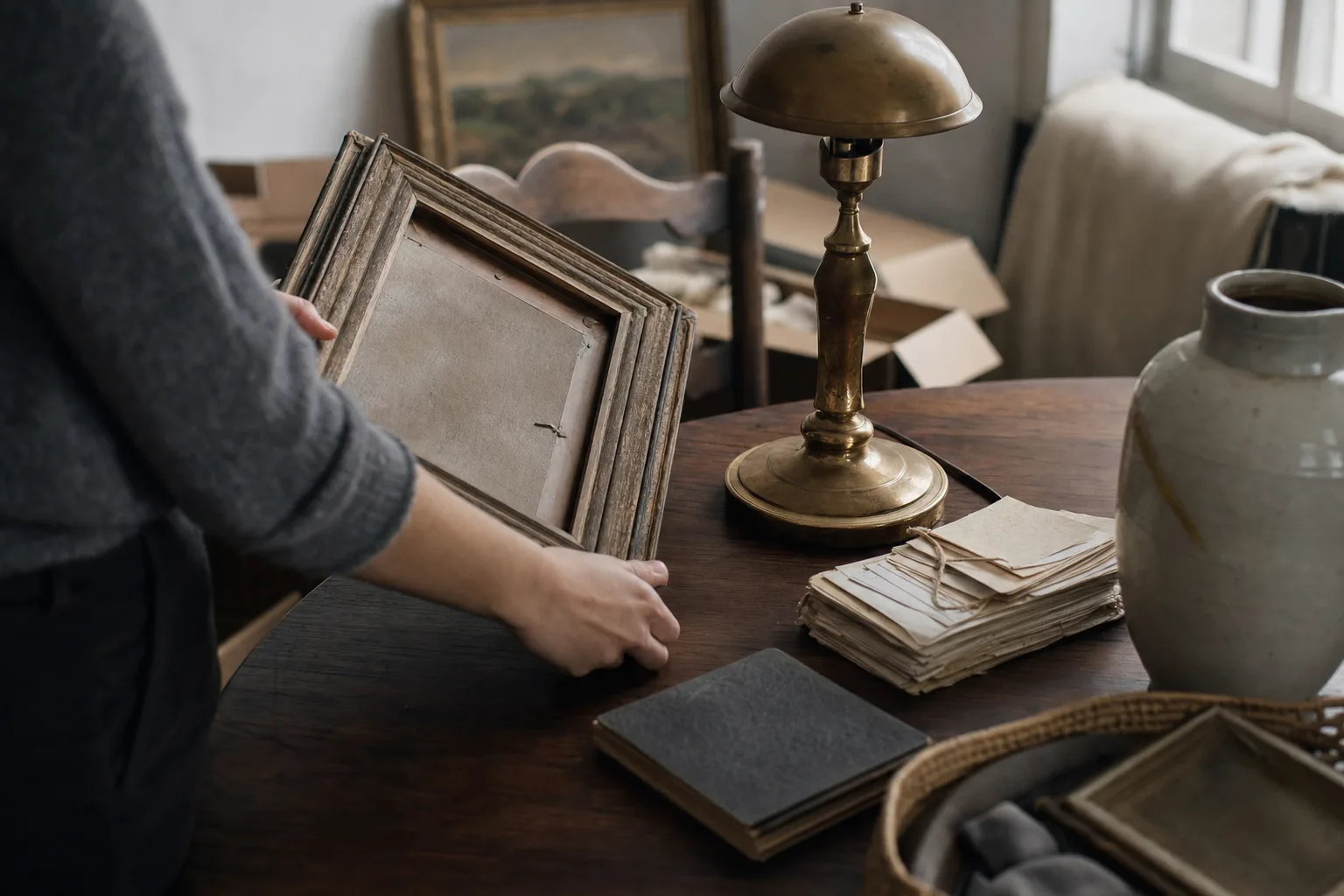
The estate appraisal process starts with a family, a crowded room, and a question: what should we tell the appraiser about all these things? A brass lamp may look ordinary, while a framed picture carries a story nobody has written down. Share what you know, what you don’t know, and what you need the appraisal to address.
What information should I share about the objects?
Share the objects’ location, any known history, condition, paperwork, and the reason you need an appraisal. You don’t need to solve every mystery first. A clear account of what you know, including uncertainty, helps me understand what questions to ask and whether the requested appraisal fits the situation.
Start with the practical details. Tell me where the property is, if you’re asking about a few pieces or a larger group, and what kind of appraisal you need. I do estate, insurance, and personal property appraisals for homeowners, families, and attorneys in the Phoenix area.
Then share the object’s story as you know it. Who owned it? Where did it come from? Was it passed down, purchased, or given as a gift? Even a small detail can help distinguish what’s known from what family members have assumed over time. If nobody knows, say so. Guesswork presented as fact can cloud an otherwise useful assessment.
Photographs can help begin a conversation. Take clear pictures of the whole object, along with details such as signatures, labels, marks, damage, or repairs. Gather receipts, letters, certificates, prior appraisals, or other records if they exist. Don’t polish, repair, or take an object apart just to prepare for an appraisal. Preserve it as it is, and mention anything you know about its condition.
A surprising amount of useful information can be hiding in the least glamorous places: the back of a frame, the underside of a chair, or an old envelope tucked in a drawer. The paperwork doesn’t have to be impressive. A handwritten note with a date or a relative’s name may give me a lead to consider, though it isn’t proof of an object’s origin by itself.
What happens during the Inquiry step?
Inquiry is the first step in my appraisal process. You tell me what you need, what property is involved, and what information you already have. I use that initial conversation to understand the request and identify questions that may need attention before we move to a consultation.
Think of Inquiry as setting the table, not delivering a verdict. You don’t have to send a perfect inventory or know the right technical terms. A straightforward description is a good start: “We’re sorting a family home and need an estate appraisal,” or “We need an appraisal of these items for insurance purposes.” Then tell me where the property is and what you hope the appraisal will help you do.
It also helps to explain who is involved. A homeowner, several family members, or an attorney may have different questions about the same property. Sharing who needs the appraisal and its intended purpose helps clarify the request. If you’re unsure which service fits, ask. My services include Fine Art Authentication and Appraisal, Antique and Estate Appraisal, Collection Consulting, and Expert Witness Services.
The goal is a useful first conversation, not a performance. You don’t need to persuade me that an object is valuable, and you shouldn’t feel embarrassed if you can’t identify it. I’ve spent more than 25 years conducting auctions, and I’ve learned that good questions often begin with, “I don’t know what this is.”
What should I expect from the Consultation?
Consultation is the second step. After the initial inquiry, we discuss the appraisal request in more detail, including the property and the purpose of the work. This is the time to bring forward relevant history, photographs, and records, and to clarify what you need the appraisal to address.
For a family sorting through a home, that conversation can help separate several questions that have been tangled together. Are you trying to understand a group of belongings? Do you need an appraisal for insurance? Are you asking about a particular artwork or antique? Naming the question matters because an appraisal is prepared for a purpose, not simply as a general label for an object.
Say you find a painting with a signature and a family story attached to it. The signature, the story, and the painting’s condition are all details worth sharing. None should be treated as conclusive on its own. I’m a USPAP certified personal property appraiser, and I consider the information available in relation to the work requested.
Consultation is also a good moment to mention disagreements or gaps in the family’s understanding. One person may recall that an object belonged to a grandparent, while another remembers it arriving much later. You don’t need to settle the story before asking for help. Just make clear which parts are remembered, documented, or uncertain.
What comes in the Report and Recommendation?
Report and Recommendation is the third step in my process. It’s where the appraisal work is brought together in a written report and recommendation, based on the agreed request and the information available. The report gives you something organized to refer to, rather than leaving the family with a pile of objects and half-remembered conversations.
A written report can be especially helpful when several people are sorting, discussing, or making plans for property. It records the work in a form that can be reviewed later. The recommendation relates to the appraisal and the circumstances discussed, so the earlier steps matter: a clear inquiry and useful consultation give the work a sound starting point.
This is one reason to tell me what the report is for. Estate, insurance, and personal property appraisal requests can call for different kinds of attention. Be direct about the intended use and the people who will rely on the report. If the purpose changes, raise that before the work is completed so the request can be considered clearly.
An appraisal isn’t a family history, and it can’t turn an unverified story into a fact. But the details you share can help distinguish documented information from family recollection and unanswered questions. That distinction is useful in its own right. It gives everyone a clearer picture of what is known and what remains uncertain.
How can my family prepare to get started?
Make a simple list of the objects or groups you want to ask about, collect any records you can find, and write down the purpose of the appraisal. Then contact me with what you know and what you’re unsure about. You can request an appraisal through my website or call my appraisal line.
You don’t need to catalog every drawer before making an inquiry. Start with the main concern and a few clear photographs, if you have them. Keep original documents together, and avoid changing an object’s condition while you prepare. If you’re sorting a whole home, mention that at the outset rather than trying to decide alone which objects matter.
I’m Josh Levine, an auctioneer, appraiser, and author based in Phoenix, Arizona. I’ve conducted more than 500 auctions over 25-plus years, and I know that the first step for a family is often simply figuring out what questions to ask. The appraisal process gives that conversation a structure: Inquiry, Consultation, then Report and Recommendation.
To begin, request an appraisal or call me at (480) 618-7862. Bring the stories, the paperwork, the uncertain details, and the objects themselves. We can start with what your family knows and work from there.
Frequently asked questions
What information should I gather before an estate appraisal?
Gather any known history, receipts, letters, prior appraisals, and details about condition or repairs. Clear photographs can help start the conversation, but you don’t need a complete inventory.
How does Josh Levine’s appraisal process work?
My process has three steps: Inquiry, Consultation, then Report and Recommendation. We begin by clarifying what you need, discuss the request in more detail, and bring the work together in a written report and recommendation.
Can I ask for an appraisal if I don’t know what an object is?
Yes. Tell me what you know and what remains a mystery. You don’t need to identify an object or prove its history before making an inquiry.
Where does Josh Levine do estate appraisals?
I do estate, insurance, and personal property appraisals for homeowners, families, and attorneys in the Phoenix area. You can share the property’s location when you contact me.
How can I request an appraisal?
Request an appraisal at joshlevinespeaks.com/appraisal or call (480) 618-7862. Share the appraisal’s purpose, what property is involved, and any details you already have.
Need an Expert?
Whether you're looking to value an estate or need a dynamic keynote speaker, Josh Levine can help.